


Aramid Fiber
IMPACT is one of the most professional aramid fiber manufacturers and suppliers in China. Please feel free to wholesale high quality aramid fiber at competitive price from our factory. For more cheap products, contact us now.
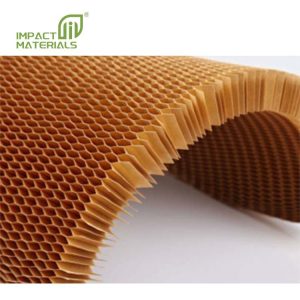
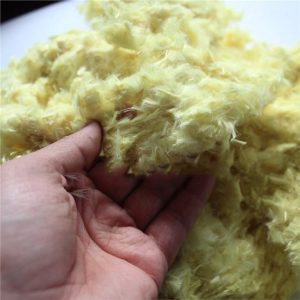
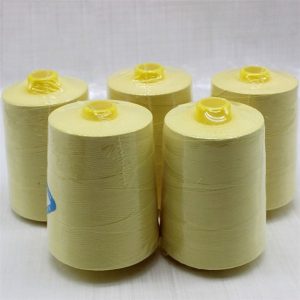
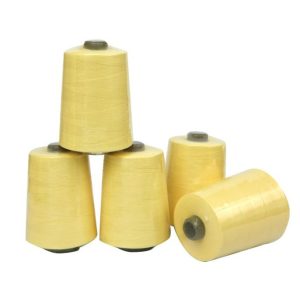
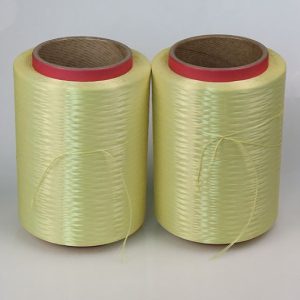
Aramid Fiber: The Ultimate High-Performance Synthetic Fiber for Extreme Conditions
As a global leader in advanced material solutions, Impact Materials delivers industrial-grade aramid fibers engineered to withstand temperatures up to 500°C, tensile strengths exceeding 3,000 MPa, and chemical corrosion resistance across aerospace, military, and energy sectors.
Technical Specifications of Impact Aramid Fiber
| Parameter | Para-Aramid (Kevlar® Type) | Meta-Aramid (Nomex® Type) | Impact Custom Blends |
|---|---|---|---|
| Tensile Strength (MPa) | 2,800-3,200 | 1,500-1,800 | 3,500+ (Hybrid Grades) |
| Continuous Heat Resistance (°C) | 200 | 220 | 500 (Short-term) |
| LOI (Limiting Oxygen Index) | 28-30 | 29-32 | 35+ (Flame Retardant Grades) |
* Data based on ASTM D885 & ISO 2078 testing standards. Custom formulations available.
Critical Applications of Aramid Fiber
Ballistic Protection Systems
- Bulletproof vests with 50+ layer aramid weaving
- Military vehicle armor panels (STANAG 4569 Level 3)
- Helmet liners reducing impact force by 60%
High-Temperature Industrial Seals
- Oil & gas pipeline gaskets (API 6A compliant)
- Chemical reactor packing at 400°C+ environments
- Thermal insulation sleeves for aerospace hydraulics
Proprietary Manufacturing Process
Step 1: Polymer Synthesis
PPTA (Poly-p-phenylene terephthalamide) polymerization with 99.9% purity control
Step 2: Spinning Technology
Dry-jet wet spinning achieving 1.2-2.0 dtex filament fineness
Step 3: Surface Treatment
Plasma coating for 30% improved resin adhesion (ASTM D4477)
Frequently Asked Questions
Q: What’s the minimum order quantity (MOQ)?
A: Standard MOQ is 500kg for bulk orders, with trial samples starting from 100g.
Q: Can you match Kevlar®/Twaron® specifications?
A: Yes, our fibers meet or exceed DuPont Kevlar® 29/49 and Teijin Twaron® T2000 specs.
Ready to engineer the impossible? Contact our material scientists:
whatsapp:+86150 5710 8966 | 📧 info@ictmaterial.com
Get Instant Pricing
The Secret and Application of All-purpose Aramid Fiber
1. Basic Overview of Aramid Fiber
1. Definition and naming
Aramid fiber, also known as aromatic polyamide fiber, is a synthetic fiber made from aromatic compounds through polycondensation spinning. This fiber occupies an important position in the field of materials due to its unique chemical structure and properties. In its name, “aramid” is the transliteration of the English word “Aramid”. “Aramid” reflects that there are aromatic rings in its molecular structure, and “Lun” is a word commonly used in the names of synthetic fibers, indicating that it belongs to the category of synthetic fibers.
2. Chemical structure
The chemical structure of aramid fiber has remarkable characteristics. Its main molecular chain is composed of aromatic rings and amide bonds, which gives aramid fiber many excellent properties. The presence of aromatic rings makes the molecule have higher rigidity and stability, and enhances the strength and modulus of the fiber. Amide bonds form hydrogen bonds between molecules, further improving the cohesion and stability of the fiber. From the perspective of molecular arrangement, aramid fiber has a high degree of orientation, and the molecular chains are arranged in an orderly manner along the axial direction of the fiber, so that the fiber can withstand greater tension in the axial direction. In addition, the chemical structure of aramid fiber also determines that it has good properties such as high temperature resistance and chemical corrosion resistance.
3. Development History
The development of aramid fiber is full of innovation and breakthroughs. In 1965, DuPont of the United States took the lead in introducing meta-oriented aromatic polyamide fiber to the market. This fiber was called Nomex, which opened the way for the industrial application of aramid fiber. In the early 1970s, DuPont developed a second product, the para-aromatic polyamide fiber Kevlar, which has occupied the leading position in the aramid market ever since. It was not until 1986 that the Dutch Akzo company launched Twaron fiber. In 1987, the Technora of Teijin Company of Japan and the ARMOC fiber of Russia appeared one after another, breaking the monopoly of Kevlar in the market and making the aramid fiber market more diversified. As time goes by, the application fields of aramid fiber continue to expand, and the production technology is also continuously improved and innovated, laying the foundation for its application in more fields.
2. Classification and performance characteristics of aramid fibers
1. Classification
There are many ways to classify aramid fibers. According to the connection position between the amide bond and the aromatic ring, they can be divided into meta-aromatic polyamide fibers and para-aromatic polyamide fibers, such as aramid 1313 and aramid 1414. From the perspective of synthetic raw materials, one type is formed by the polycondensation of p-aminoacyl chloride, such as polyparabenzamide fiber (PBA); the other type is formed by the polycondensation of aromatic diamines and aromatic diacyl chlorides, among which metaphenylene isophthalamide (MPDI) fiber and paraphenylene terephthalamide (PPTA) fiber are the most important. These classification methods help us understand and apply aramid fibers more accurately.
2. Para-aramid
Para-aramid has excellent performance characteristics. In terms of strength, its tensile strength can reach more than 2800MPa, which is 5-6 times that of high-quality steel. The modulus is as high as 130GPa, and it can maintain a good shape when subjected to stress. It also has excellent high temperature resistance and only begins to decompose at a high temperature of 560℃. The following is a performance comparison table of para-aramid and some materials:
|Material|Tensile strength (MPa)|Modulus (GPa)|Decomposition temperature (℃)|
| —- | —- | —- | —- |
|Para-aramid|>2800|130|560|
|High quality steel|400 – 550|200|/|
|Ordinary fiberglass|1000 – 2500|70|/|
Due to these excellent properties, para-aramid is widely used in national defense, military industry, aerospace and other fields, such as the manufacture of bulletproof vests, aircraft wings, etc.
3. Meta-aramid
Meta-aramid has outstanding performance characteristics. It has excellent high temperature resistance and can be used for a long time in an environment of 250°C. It will not melt or burn even if it withstands a high temperature of 400°C for a short period of time. It has excellent flame retardant properties, with a limiting oxygen index (LOI) greater than 28, and can quickly self-extinguish after leaving the fire source. It has good chemical stability and can resist corrosion from a variety of chemical substances. In terms of application cases, in the field of firefighting, firefighters’ fireproof clothing uses a large amount of meta-aramid fabrics, which can provide reliable protection for firefighters in high-temperature fires. In the industrial field, the thermal insulation curtains in high-temperature workshops are made of meta-aramid material, which can effectively block heat transfer and ensure the safety of the workshop environment. In addition, in the field of electrical insulation, meta-aramid paper is used for transformer insulation, which can improve the safety and service life of the transformer.
3. Core application areas of aramid fiber
1. National defense and security
Aramid fiber plays a vital role in the field of national defense and security. Bulletproof vests are one of its typical applications. The high strength and high modulus characteristics of aramid fiber enable it to effectively disperse the impact energy of bullets and provide reliable protection for the wearer. For example, the bulletproof vests widely equipped by the US military are made of aramid fiber, which greatly reduces the casualties of soldiers on the battlefield. In terms of armored vehicles, adding aramid fiber composite materials to the surface of armor can enhance the impact resistance of armor, reduce the weight of the vehicle body, and improve the mobility of the vehicle. For example, the British “Warrior” infantry fighting vehicle uses aramid fiber reinforced armor to improve its protection and combat effectiveness. Military helmets are made of aramid fiber, which can reduce weight while ensuring the protective effect and reduce the burden on soldiers’ necks. For example, the F1 helmet of the French army is made of aramid fiber, which has excellent protection performance and is comfortable to wear.
2. New energy and transportation
In the field of new energy vehicles, the application of aramid fiber has brought new impetus to the development of the industry. Its light weight and high strength characteristics can be used to manufacture automotive parts, such as body frames, battery boxes, etc., to reduce the weight of the vehicle body and increase the driving range. For example, some Tesla models use aramid fiber composite materials in battery boxes to enhance the safety and stability of the battery. In terms of tires and drive belts, aramid fiber, as a reinforcing material, can improve the strength and wear resistance of tires, reduce rolling resistance, and reduce energy consumption. After using aramid fiber, the drive belt can withstand higher tension and improve transmission efficiency. The application of aramid fiber helps the new energy vehicle and transportation industries to achieve lightweight and efficient development and promote technological progress in the industry.
3. Industry and electronics
Aramid fiber has broad application prospects in the industrial and electronic fields. In terms of electrical insulation, aramid paper has excellent insulation properties and high temperature resistance, and is widely used in electrical equipment such as transformers and motors. As the power industry develops towards high voltage and large capacity, the performance requirements for electrical insulation materials are getting higher and higher. The application of aramid fiber can effectively improve the safety and reliability of electrical equipment. In the field of 5G communications, aramid fiber can be used to manufacture antenna covers, cables and other components. Its low dielectric constant and low loss characteristics can reduce signal transmission loss and improve communication quality. With the rapid development of 5G technology, the demand for high-performance materials continues to increase, and aramid fiber will play a greater role in this field.
4. Environmental protection and emerging fields
Aramid fiber shows unique advantages in environmental protection and emerging fields. In terms of high-temperature smoke filtration, aramid fiber filter bags can be used for a long time in high-temperature and highly corrosive environments, effectively filtering smoke particles in industrial exhaust gas and reducing environmental pollution. For example, aramid fiber filter bags are widely used in high-temperature flue gas treatment in industries such as steel and cement. In terms of robot tendon materials, the high strength and light weight of aramid fiber make it an ideal tendon material, which can improve the robot’s motion performance and operating accuracy. With the continuous improvement of environmental protection requirements and the development of emerging technologies, the application prospects of aramid fiber in these fields are very broad, and it is expected to be promoted and applied in more emerging fields.
4. Layout and production capacity of aramid fiber production enterprises
1. Global landscape
The global aramid fiber market presents an oligopolistic pattern. DuPont of the United States is the leader of the global aramid fiber industry. With its first-mover advantage and strong technical research and development capabilities, it occupies a large share in both the para-aramid and meta-aramid markets, with a market share of about 40%. DSM, a subsidiary of the Netherlands’ Akzo Nobel, also has a high reputation and market share in the global market for its Twaron fiber, which accounts for about 25%. Technora fiber of Japan’s Teijin Company has certain competitiveness in the high-end market due to its high performance, with a market share of about 15%. In addition, some Russian companies also occupy a certain share in the aramid fiber market. These companies dominate the development of the global aramid fiber market with advanced production technology, stable product quality and a wide customer base.
2. China’s leading enterprises
In China, Taihe New Materials and Sinochem International are leading companies in the aramid fiber field.
Taihe New Materials is a pioneer in the domestic aramid fiber industry. In terms of production capacity, its annual production capacity of meta-aramid reaches 7,000 tons and its annual production capacity of para-aramid is 1,500 tons. The company has core technologies with independent intellectual property rights, and its product quality has reached international advanced levels. In terms of development planning, Taihe New Materials plans to further expand its production capacity, improve product quality, and expand its application areas. The company will increase its R&D investment to develop high-performance, differentiated aramid fiber products to meet the needs of the high-end market. At the same time, it will actively explore the international market and enhance the international influence of the brand.
Sinochem International also has strong strength in the field of aramid fiber. Through technology introduction and independent innovation, the company has established an advanced aramid fiber production line. At present, Sinochem International’s annual production capacity of meta-aramid is 5,000 tons and its annual production capacity of para-aramid is 1,000 tons. Its development plan focuses on the extension and integration of the industrial chain. The company will strengthen cooperation with upstream and downstream enterprises to improve industrial synergy. In terms of research and development, Sinochem International will focus on overcoming key technical difficulties in aramid fiber production, reducing production costs and improving the cost performance of products. In addition, the company also plans to increase investment in environmental protection and sustainable development to promote the green development of the aramid fiber industry.
5. Development prospects and challenges of aramid fiber
1. Development prospects
The development prospects of aramid fiber are very broad. From the perspective of market demand, with the rapid development of defense, new energy, electronics and other industries, the demand for high-performance materials continues to grow. With its excellent performance, the market demand for aramid fiber will continue to expand. In the field of national defense, the performance requirements for bulletproof equipment and military equipment are increasing, and the application of aramid fiber will be more extensive; the vigorous development of the new energy vehicle industry also provides a huge market space for aramid fiber in the manufacture of lightweight components. From the perspective of technological innovation, scientific researchers are constantly exploring new preparation processes and modification methods for aramid fibers, which is expected to further improve its performance and expand its application areas. For example, aramid fiber products with higher strength and lighter weight are developed for use in high-end fields such as aerospace. In the future, aramid fiber will play an important role in more fields, and the market size is expected to continue to grow.
2. Challenges
Aramid fiber also faces some challenges in its development. In terms of cost, its production process is complicated and the price of raw materials is high, resulting in high product costs, which limits its application in some cost-sensitive fields. In terms of environmental protection, certain pollutants may be generated during the production process, which puts pressure on the environment. To meet these challenges, companies can increase R&D investment, improve production processes, improve production efficiency, reduce raw material consumption, and thus reduce production costs. In terms of environmental protection, companies should strengthen the research and development of environmental protection technologies, adopt clean production processes, and reduce pollutant emissions. At the same time, the government can introduce relevant policies to support the green development of the aramid fiber industry and promote the sustainable development of the industry.